
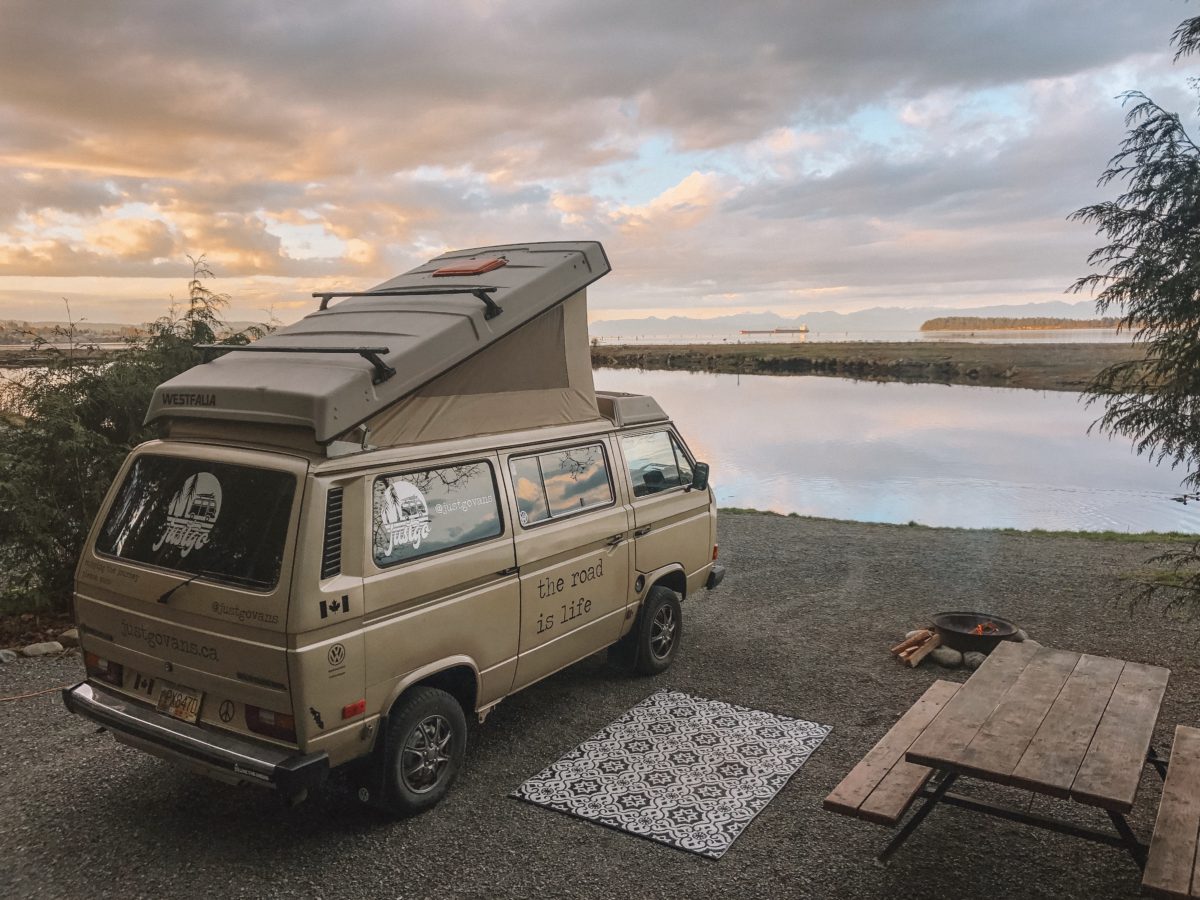
Fall Camping on Vancouver Island: Why Autumn Might Be the Island’s Most Underrated Camping Season
Fall camping on Vancouver Island is what happens when summer starts packing up — but the Island isn’t finished yet.
The roads get quieter. Campgrounds begin to empty. Mornings become cooler. Forests shift. Fog hangs over the water. Beaches feel bigger without the summer crowds, and the first Pacific storms begin reminding everyone that another season is arriving.
But between the busiest days of summer and the wettest days of winter sits one of the most interesting windows for exploring Vancouver Island.
Fall.
For campervan and RV travellers, autumn can offer the freedom of a summer road trip with fewer people competing for the same places.
You just need to be prepared for Vancouver Island to change the weather on you.
Here’s what to know about fall camping on Vancouver Island.
When Is Fall Camping Season on Vancouver Island?
Fall generally means September through November, but those months can deliver dramatically different experiences.
September can still feel surprisingly summer-like, with relatively long days and opportunities for warm, dry weather.
October makes the seasonal transition much more obvious. Temperatures cool, daylight decreases and wetter weather becomes increasingly likely.
By November, many parts of Vancouver Island are moving toward winter conditions, with heavier rain and Pacific storms becoming a bigger part of coastal travel.
That progression makes fall less like one season and more like three different versions of Vancouver Island.
Is September a Good Time to Camp on Vancouver Island?
September might be one of the best times of the year for a Vancouver Island road trip.
Peak summer travel begins to ease.
Families return to school routines.
Some of the busiest tourism traffic declines.
Yet there can still be plenty of daylight for exploring and beautiful weather for camping.
It’s an appealing combination:
Summer energy without quite as much summer chaos.
Campgrounds and tourism businesses may begin adjusting operating schedules as the season progresses, however, so always confirm availability directly before travelling.
Why Camp on Vancouver Island in Fall?
Because the entire rhythm of the Island changes.
Summer encourages you to go everywhere.
Fall makes you want to stay somewhere.
The morning fog takes longer to disappear.
A beach that felt busy in August can suddenly feel enormous.
Rain makes the forest darker and greener.
You start appreciating a warm drink differently.
And getting back inside the campervan after a cold walk beside the ocean becomes part of the experience.
Fall is less polished.
And that’s exactly why some travellers love it.
Is Fall Good for Campervan + RV Travel?
Absolutely.
A campervan or RV can be particularly appealing during shoulder-season travel because shelter travels with you.
Explore during the day.
Retreat somewhere warm when conditions change.
Wake up and check the weather before deciding what happens next.
That flexibility becomes increasingly valuable as autumn progresses.
If you’re renting, ask the operator about the vehicle’s heating, water systems and seasonal operating requirements.
By later fall, colder overnight temperatures can affect certain RV systems and equipment.
The vehicle needs to be appropriate for the conditions you’re entering.
Start a Fall Vancouver Island Road Trip From Nanaimo
Starting around Nanaimo puts travellers in a useful central position for exploring Vancouver Island in several directions.
Head north toward Parksville, Qualicum Beach, the Comox Valley and Campbell River.
Travel west toward Tofino and Ucluelet.
Or head south toward Victoria and southern Vancouver Island.
Fall is particularly well suited to shorter, more flexible road trips.
You don’t necessarily need to cross half the Island.
Pick an area.
Slow down.
Explore it properly.
Tofino + Ucluelet in Fall
Vancouver Island’s west coast begins changing personality as fall progresses.
Summer beach days gradually give way to more dramatic Pacific conditions around Tofino and Ucluelet.
Rain becomes increasingly likely.
Winds pick up.
Waves get bigger.
And eventually, storm-watching season begins.
For some travellers, that’s not a downside.
It’s the attraction.
There is something distinctly Vancouver Island about walking beside a wild Pacific Ocean and then retreating somewhere warm while the weather continues outside.
Check road and weather conditions before travelling, particularly as the season advances.
Parksville + Qualicum Beach
Parksville and Qualicum Beach can feel very different once the height of summer passes.
The beaches remain.
The forests remain.
The ocean remains.
But the pace slows.
That makes central Vancouver Island particularly appealing for shorter fall escapes from Nanaimo or for travellers who don’t want every road trip to involve driving all the way to the west coast.
Sometimes the best trip is the one that starts an hour away.
Comox Valley + Campbell River
Heading north in fall can bring cooler conditions, changing landscapes and access to another side of Vancouver Island.
The Comox Valley and Campbell River offer plenty of opportunities for outdoor exploration, coastal scenery and road-trip stops.
As you travel farther north or into higher elevations, pay closer attention to weather and road conditions.
Fall conditions can change considerably depending on geography and elevation.
Victoria + Southern Vancouver Island
Southern Vancouver Island is another strong option for fall exploration.
A road trip toward Victoria can combine camping and outdoor experiences with restaurants, communities, coastal walks and city stops.
That’s one of the advantages of travelling Vancouver Island by road.
Your camping trip doesn’t have to look like anyone else’s camping trip.
What Is Vancouver Island Weather Like in Fall?
Variable.
Very variable.
September might deliver sunshine.
October might give you sunshine, fog, rain and wind in the same weekend.
November can begin feeling much closer to winter.
Coastal weather is part of travelling Vancouver Island, and fall makes that particularly obvious.
The solution isn’t trying to outsmart every forecast.
It’s being prepared for more than one outcome.
Pack waterproof outerwear.
Bring warm layers.
Have dry footwear.
Keep extra clothing protected.
And don’t underestimate how quickly temperatures can feel different once the sun disappears.
Fall Camping Is About Staying Dry
Like winter camping on Vancouver Island, moisture management becomes increasingly important as fall progresses.
Rain itself isn’t necessarily a problem.
Being wet for three consecutive days is.
If travelling by campervan or RV, have a plan for wet jackets and footwear.
Ventilate appropriately to manage condensation.
Protect bedding from damp gear.
Carry extra dry clothing.
And once again:
Bring more socks.
There is apparently no season on Vancouver Island in which extra socks are a bad decision.
Can You Have a Campfire in Fall?
Maybe.
Do not assume.
Early fall can still coincide with wildfire-related restrictions after a dry summer, while campground-specific rules can apply at any time.
As conditions change later in the season, restrictions may also change.
Always check current BC wildfire restrictions and campground regulations before having a fire.
The calendar does not determine whether a campfire is permitted.
Current conditions do.
What Should You Pack for Fall Camping on Vancouver Island?
Fall is all about layers and weather flexibility.
Consider bringing:
- Waterproof jacket
- Warm insulating layers
- Weather-resistant footwear
- Extra dry socks and clothing
- Appropriate sleeping gear
- Flashlights or headlamps
- Portable charging or backup power
- Food and drinking water
- Basic emergency supplies
- Current campground information
- Road and weather information
- Camera or phone
And remember that daylight disappears earlier as fall progresses.
A road trip itinerary that works perfectly in July may feel very different in November.
Are Vancouver Island Campgrounds Open in Fall?
Some are.
Some aren’t.
And some operate with reduced services.
Campground operating seasons vary considerably, so check individual locations before building your itinerary.
Water may be turned off.
Facilities can close.
Reservations may operate differently.
Private campgrounds and RV parks set their own schedules.
This is one of the biggest differences between summer and shoulder-season camping.
Never assume “campground exists” means “campground is currently operating.”
Fall Is Made for Vancouver Island Photography
If summer produces postcard Vancouver Island, fall produces something moodier.
Fog.
Rain-covered roads.
Low clouds.
Empty beaches.
Dark forests.
Campervan windows covered in droplets.
Stormy oceans.
Golden evening light when the weather suddenly breaks.
It’s an entirely different visual language.
And for JUSTGO, those moments are exactly what make travel socialgenic.
You don’t need perfect weather to create something worth capturing.
Sometimes imperfect weather creates the stronger story.
Fewer Crowds Change the Experience
One of the biggest advantages of fall isn’t something you pack.
It’s something that’s missing.
People.
Not everywhere, obviously.
But after peak summer, many destinations begin to feel less compressed.
You can slow down.
Change your mind.
Stay somewhere longer.
Actually hear the ocean.
And sometimes experience a place without feeling like you’re participating in a synchronized tourism event.
That breathing room can completely change how a destination feels.
Fall Road Trips Reward Flexibility
Summer rewards reservations.
Fall rewards adaptability.
You should still know where you’re sleeping.
You should still check operating schedules.
You should still monitor road and weather conditions.
But leave room for the trip to change.
If the west coast forecast looks brutal, maybe go somewhere else.
If you discover somewhere incredible, stay.
If the weather clears unexpectedly, take advantage of it.
The itinerary should serve the adventure — not control it.
Is Fall Camping on Vancouver Island Worth It?
For the right traveller, absolutely.
If your ideal camping trip requires hot temperatures, swimming and guaranteed sunshine, summer is probably a better fit.
But if you like:
quieter roads
fewer crowds
cooler nights
dramatic weather
empty beaches
rainforest
foggy mornings
and road trips that feel slightly less predictable
fall deserves serious consideration.
Especially September.
There is something satisfying about realizing everyone else has declared summer over while Vancouver Island is still very much open for exploration.
Summer Ends. Adventure Doesn’t.
Eventually the nights get colder.
The rain becomes more persistent.
Storm season arrives.
And Vancouver Island begins moving toward winter.
But there’s a substantial stretch of road between summer and all of that.
You can spend it waiting for next year.
Or you can see what the Island looks like when everyone else goes home.
Pack another layer.
Bring the rain jacket.
Pick a direction.
And if Vancouver Island changes the plan?
Even better.
Discover what’s out there.