
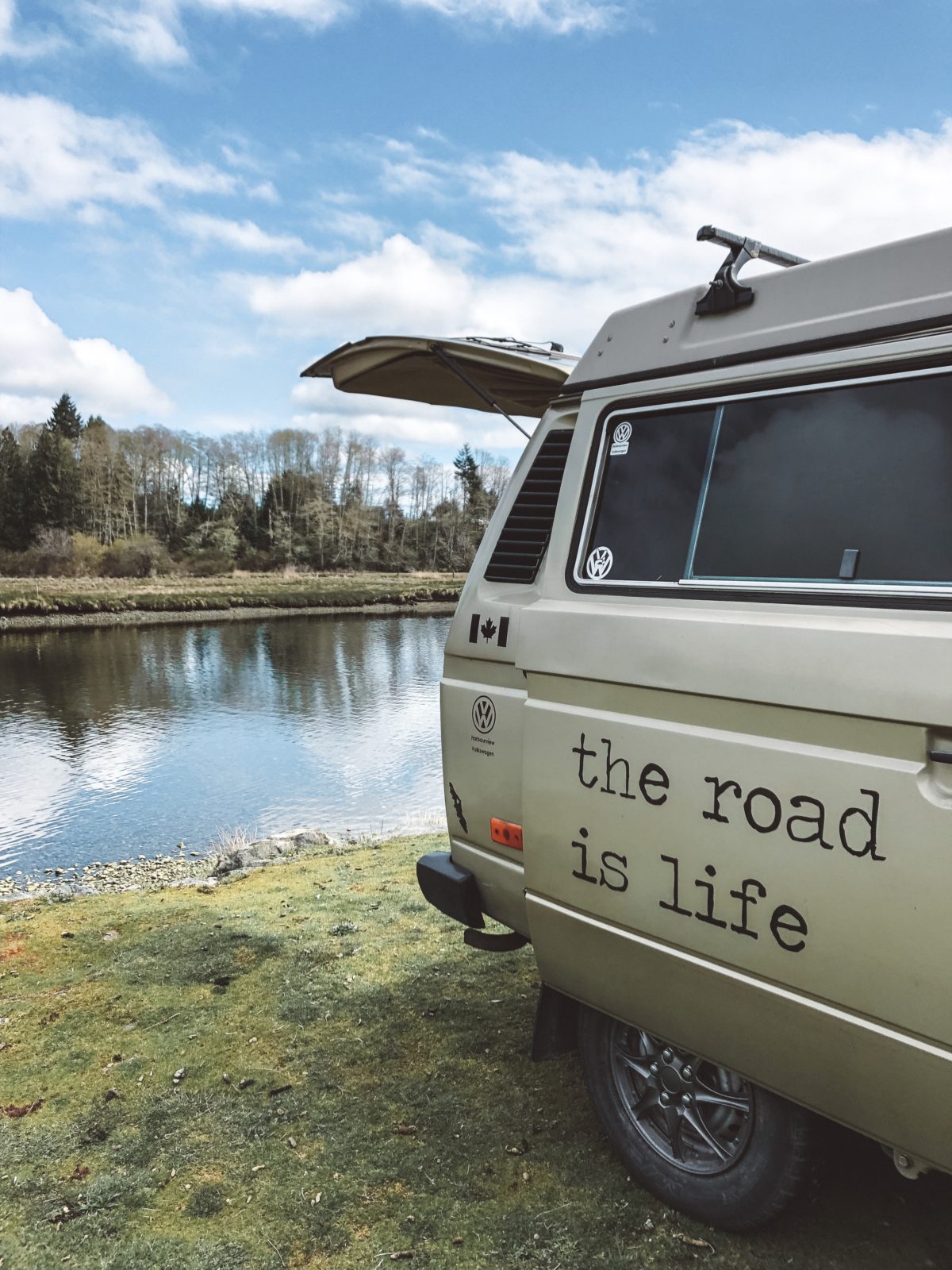
Sometimes the best thing you see on a Vancouver Island road trip wasn’t on the itinerary.
An eagle drops onto the shoreline.
A seal appears beside the dock.
A herd of Roosevelt elk stops traffic.
Something enormous surfaces offshore.
Or somebody suddenly yells:
“WAS THAT A WHALE?”
Vancouver Island is surrounded by ocean and covered by forests, mountains, rivers, beaches and wetlands that support an extraordinary range of wildlife.
From whales and sea lions to black bears, bald eagles and Roosevelt elk, wildlife can become part of the journey almost anywhere on the Island.
Here are some of the animals you might encounter — and where to start looking.
What Wildlife Can You See on Vancouver Island?
Depending on the location and season, wildlife on and around Vancouver Island can include:
- Orcas
- Humpback whales
- Gray whales
- Black bears
- Roosevelt elk
- Bald eagles
- Harbour seals
- Sea lions
- River otters
- Sea otters
- Deer
- Marine birds
- Salmon
- Wolves and cougars — although encounters are far less common
There are no guarantees with wildlife.
That’s what makes seeing something in the wild different from visiting an attraction.
You have to pay attention.
Where Can You See Whales Around Vancouver Island?
Whale watching is one of Vancouver Island’s best-known wildlife experiences.
Depending on the region and time of year, surrounding waters can be home to or visited by humpback whales, orcas, gray whales and other cetaceans.
Popular whale-watching departure areas include:
Victoria
Tofino
Ucluelet
Campbell River
Telegraph Cove
Different regions offer different marine environments and wildlife opportunities.
If seeing whales is a priority, consider booking with an established wildlife-tour operator that follows current viewing regulations and responsible wildlife practices.
And remember:
You don’t necessarily need to be on a whale-watching boat to spot something offshore.
Keep watching the water.
Orcas Around Vancouver Island
Few Vancouver Island wildlife encounters generate a reaction quite like seeing an orca.
Different populations of killer whales use the waters around British Columbia, including fish-eating resident killer whales and mammal-eating Bigg’s killer whales.
Their movements aren’t dictated by your vacation itinerary.
Which means:
Don’t build a trip around expecting a guaranteed wild sighting.
Instead, choose regions and responsible wildlife experiences that give you an opportunity to observe marine life while appreciating everything else happening around you.
The anticipation is part of it.
Humpback Whales
Humpback whales are another spectacular marine species found in waters around Vancouver Island.
Their size alone can be difficult to comprehend until you actually see one surface.
Sometimes the first clue isn’t the whale itself.
It’s the sound.
Or a distant blow above the water.
If you’re travelling along coastal routes, make a habit of stopping at viewpoints and actually looking offshore for a while.
Wildlife spotting rewards patience.
Gray Whales Around Tofino + Ucluelet
The west coast of Vancouver Island is particularly well known for marine wildlife.
Tofino, Ucluelet and the Pacific Rim region combine ocean, beaches and rainforest with opportunities for wildlife viewing.
Gray whales are among the species associated with the Pacific coast and seasonal migration.
That makes the west coast especially compelling for a road trip where wildlife is part of the experience rather than the only reason for travelling.
You can spend the morning watching the ocean and the afternoon walking through rainforest.
Not bad.
Black Bears on Vancouver Island
Vancouver Island has a significant black bear population.
But seeing a bear isn’t an invitation to get closer.
Black bears may be encountered around forests, roadsides, shorelines and communities, particularly where food sources are present.
If you’re camping:
Store food properly.
Keep your campsite clean.
Never feed wildlife.
Don’t leave attractants unattended.
Follow all campground and park requirements for food storage and wildlife safety.
And if you see a bear from the road, don’t create a dangerous traffic situation trying to get a photograph.
Wildlife isn’t content at any cost.
Roosevelt Elk
Want to see an animal that makes you reconsider how large an elk can be?
Meet the Roosevelt elk.
Vancouver Island is one of the places where these impressive animals can be found, particularly in areas of central and northern Vancouver Island.
You may occasionally encounter elk near highways and forested areas.
Give them plenty of room.
And be especially alert while driving around dawn, dusk and areas where wildlife may cross the roadway.
Your campervan loses that argument.
Bald Eagles
Bald eagles are one of the more recognizable wildlife sightings around Vancouver Island.
Look around:
- Shorelines
- Estuaries
- Rivers
- Harbours
- Tall trees near the coast
Sometimes they’re soaring overhead.
Sometimes they’re perched somewhere so obvious you wonder how you didn’t notice them five minutes earlier.
For photographers and creators, they’re also a perfect example of why slowing down matters.
The shot usually appears after everyone else has stopped looking.
Seals + Sea Lions
Spend enough time around Vancouver Island’s coast and you’ll probably start scanning the water for little heads.
Harbour seals can be seen in coastal environments around the Island, while sea lions can also be encountered in certain areas and seasons.
Docks, harbours, rocky coastlines and marine tours can all provide viewing opportunities.
Enjoy them from a respectful distance.
Even when they look extremely committed to doing absolutely nothing.
Sea Otters
Sea otters are one of Vancouver Island’s great wildlife conservation stories.
They are particularly associated with portions of the Island’s more remote west and northwest coast.
Seeing one floating in the Pacific might look adorable.
It is also a reminder that Vancouver Island’s marine ecosystems are complex, interconnected and constantly changing.
Wildlife isn’t just something to photograph.
It’s part of the place you’re travelling through.
Salmon
One of Vancouver Island’s most important wildlife spectacles happens underwater — until it doesn’t.
Salmon return to Island rivers and streams as part of their spawning cycles, supporting ecosystems and numerous other species.
Depending on the season and location, travellers may be able to observe salmon runs from designated viewing areas.
The exact timing varies by species, river and environmental conditions, so check current local information before planning a trip specifically around a run.
Wildlife Around Campbell River
Campbell River makes an excellent base for travellers who want to push their Vancouver Island road trip farther north.
The surrounding region combines:
Ocean + islands + rivers + forests + mountains.
That creates opportunities for marine and terrestrial wildlife experiences while also positioning you for the journey toward northern Vancouver Island.
From here, you can continue toward Sayward, Telegraph Cove, Port McNeill and Port Hardy.
And the farther north you travel, the more the road trip begins to feel like wilderness travel.
Wildlife Around Telegraph Cove + Northern Vancouver Island
Northern Vancouver Island deserves far more attention than it gets.
The region around Telegraph Cove, Port McNeill and Port Hardy provides access to dramatic coastal landscapes and wildlife-oriented experiences.
For travellers accustomed to the busier southern and central Island destinations, the north can feel like a completely different trip.
Fewer urban stops.
Longer stretches of highway.
More forest.
More ocean.
More reason to keep watching.
Wildlife Around Tofino + Ucluelet
The Pacific coast gives you another completely different environment.
Around Tofino and Ucluelet, wildlife experiences can involve the ocean, rainforest, tidal areas and surrounding waterways.
Combine wildlife viewing with:
Long Beach
Pacific Rim National Park Reserve
Rainforest walks
Wild Pacific Trail
Beaches
Camping
This is why we rarely recommend treating Tofino as somewhere you simply drive to, photograph and leave.
The entire region is the experience.
Wildlife Around Nanaimo
You don’t have to travel to the most remote corner of Vancouver Island to start looking for wildlife.
Nanaimo’s coastline, parks, surrounding islands and marine environment can provide opportunities to spot animals and birds while exploring the central Island.
Places such as Neck Point Park and other coastal viewpoints also give you an excuse to stop, slow down and scan the water.
Nanaimo’s central position then makes it easy to turn the wildlife search into a larger road trip.
North?
West?
South?
Pick one.
When Is the Best Time to See Wildlife on Vancouver Island?
There isn’t one perfect wildlife month.
Different species have different seasonal behaviours and migration patterns, and conditions vary from year to year.
That’s actually an advantage.
Vancouver Island wildlife isn’t a single-season experience.
Spring can bring migration and renewed activity.
Summer provides long days for exploring.
Fall can bring salmon-related wildlife activity and changing migration patterns.
Winter brings a completely different coastal environment and opportunities to experience the Island without peak-season crowds.
If you’re planning around one particular species, research its current seasonal patterns immediately before travelling rather than relying on a generic annual calendar.
Wildlife Safety on Vancouver Island
This part matters.
Vancouver Island is wild enough that travellers should know how to behave around wildlife before heading into more remote areas.
A few fundamentals:
- Never feed wildlife.
- Keep a safe distance.
- Store food and garbage securely.
- Follow campground food-storage requirements.
- Keep pets controlled.
- Don’t stop unsafely on highways for wildlife.
- Never approach an animal for a photograph.
- Follow posted closures and warnings.
- Learn current bear, cougar and wolf safety guidance before backcountry travel.
- Follow marine mammal viewing regulations on the water.
And if an animal changes its behaviour because of your presence?
You’re probably too close.
Wildlife Photography on Vancouver Island
JUSTGO is built around exploration and storytelling.
So yes.
We understand wanting the shot.
But the hierarchy should always be:
Wildlife first. Experience second. Content third.
Bring a telephoto lens if wildlife photography matters to you.
Stay on designated trails and viewing areas.
Don’t bait animals.
Don’t chase them.
Don’t disclose sensitive wildlife locations when doing so could put animals or habitats at risk.
A photograph should document an experience.
It shouldn’t create one at the animal’s expense.
Build a Vancouver Island Wildlife Road Trip
Want to make wildlife part of a larger campervan adventure?
Try this:
NANAIMO
Start centrally and explore the coastline.
↓
PARKSVILLE + QUALICUM BEACH
Beaches, tidal areas and central Island exploring.
↓
COURTENAY + COMOX
↓
CAMPBELL RIVER
Marine and river environments.
↓
SAYWARD
↓
TELEGRAPH COVE + PORT McNEILL
↓
PORT HARDY
Then take your time coming back.
Or head west from Nanaimo instead:
NANAIMO → PORT ALBERNI → UCLUELET → PACIFIC RIM → TOFINO
Two directions.
Two completely different Vancouver Island experiences.
Explore Vancouver Island by Campervan or RV
Wildlife doesn’t operate on a schedule.
That’s part of what makes a road trip such a good way to experience Vancouver Island.
Stay longer when somewhere gets interesting.
Leave early when the weather changes.
Pull over at the viewpoint.
Take the slower road.
JUSTGO campervan and RV experiences are available from the Nanaimo area, with current vehicle bookings and fleet operations managed through Island RV Rentals in Lantzville.
The Best Wildlife Encounter Might Be the One You Never Planned
You can research.
You can map.
You can reserve.
You can build the perfect itinerary.
And then Vancouver Island does something completely different.
A whale surfaces.
An eagle flies overhead.
An elk walks out of the forest.
Everyone stops talking.
That’s the moment.
Keep your eyes open.
Discover what’s out there.
JUSTGO. 🌲🐋🚐