
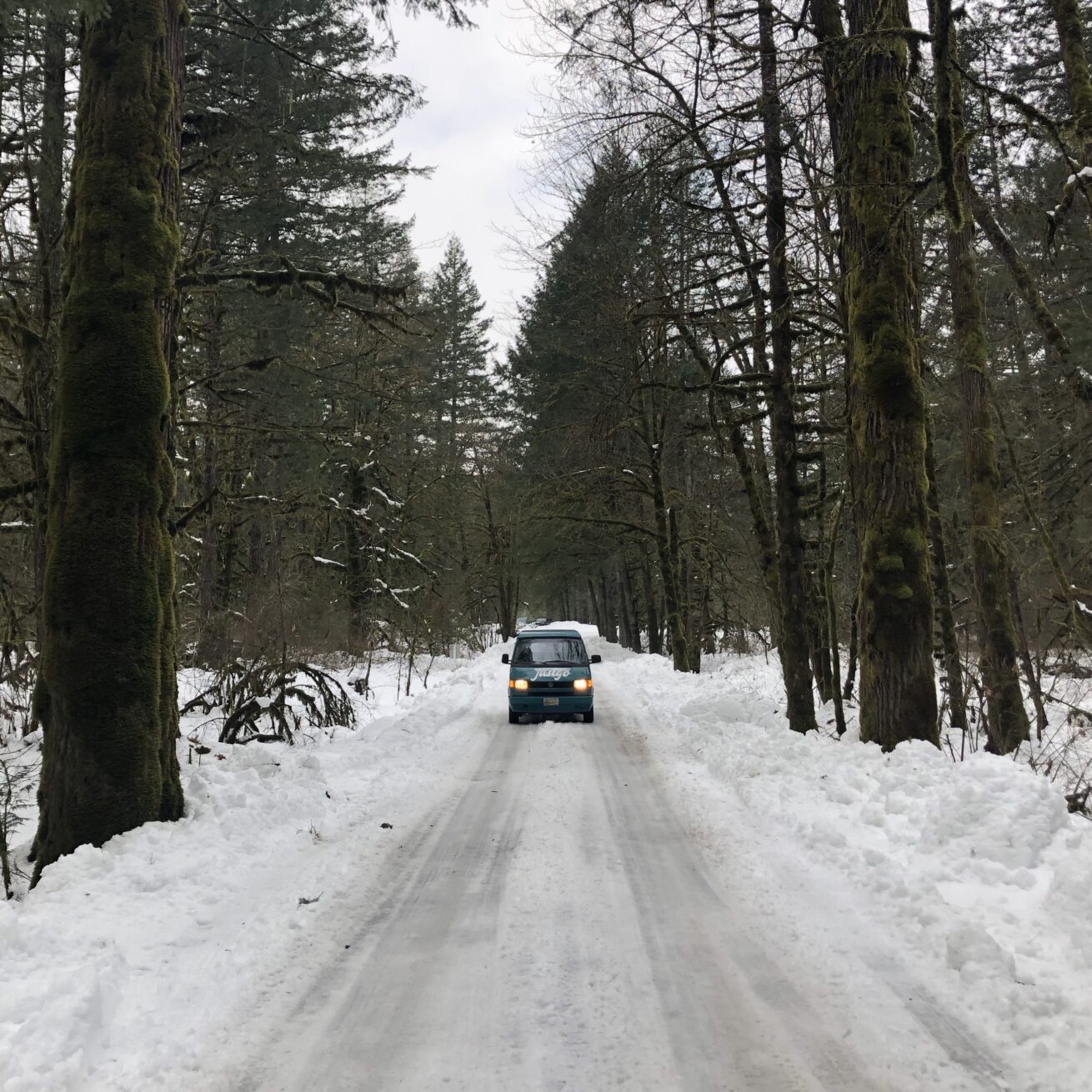
Can You Camp in Winter on Vancouver Island? Yes — Here’s What to Know
Yes, you can camp on Vancouver Island in winter — and for the right kind of traveller, it might be one of the most interesting times of year to do it.
Summer gets most of the attention, but Vancouver Island doesn’t stop being Vancouver Island when the temperatures drop.
The beaches get moodier. The forests get quieter. Storms roll across the Pacific. Popular destinations become considerably less crowded. And on the right day, winter on the Island can deliver blue skies, empty coastlines and the kind of road-trip moments that are difficult to find in July or August.
But winter camping on Vancouver Island is different from summer camping.
Some campgrounds close. Daylight hours are shorter. Conditions can change quickly. Rain is a much bigger part of the equation, particularly on the coast. And if you’re travelling by campervan or RV, preparing for cold and wet conditions becomes much more important.
Here’s what to know before planning a Vancouver Island winter camping trip.
Is Winter Camping Allowed on Vancouver Island?
Yes.
There are camping opportunities on Vancouver Island throughout the winter, although availability is much more limited than during the main camping season.
Some provincial park campgrounds operate seasonally, while others may offer reduced or winter camping opportunities. Private RV parks and campgrounds can also have their own seasonal operating schedules.
The important part is not assuming that a campground you visited in August will be operating normally in January.
Always verify current campground access, services and reservation requirements directly with the campground or BC Parks before leaving.
Winter can also mean reduced services.
Depending on the location, things like water, washrooms, sani-dumps, hookups, garbage service or campground hosts may be unavailable or operate differently outside peak season.
Think of winter camping as requiring a little more self-sufficiency.
What Is Vancouver Island Weather Like in Winter?
This is where Vancouver Island gets interesting.
There isn’t really one universal “Vancouver Island winter.”
Conditions can vary significantly depending on where you are.
The east coast around communities such as Nanaimo and Parksville can experience relatively mild coastal winter conditions, while higher elevations and more northern or inland areas can see snow and considerably colder temperatures.
The west coast around Tofino and Ucluelet is famous for another kind of winter experience entirely:
storm season.
Pacific weather systems can bring dramatic waves, heavy rainfall and strong winds to the coast.
That doesn’t necessarily make winter a bad time to visit.
For many travellers, it’s exactly the reason to go.
Just don’t confuse mild compared with much of Canada with predictable.
Winter Camping on Vancouver Island Is Mostly About Managing Water
Cold matters.
But on Vancouver Island, wet can be the bigger enemy.
A rainy afternoon becomes considerably less charming when everything you own is damp.
For campervan and RV travellers, managing moisture should be part of the trip plan.
Bring waterproof outerwear rather than merely warm clothing. Pack extra dry socks and footwear. Keep wet gear separated from bedding. Have somewhere to hang jackets. Ventilate the vehicle appropriately to help manage condensation.
And bring more warm layers than you think you’ll need.
The difference between:
“This storm is incredible.”
and
“I would like to go home now.”
can genuinely be one dry pair of socks.
Can You Campervan Camp on Vancouver Island in Winter?
Absolutely — provided the particular campervan or RV is equipped appropriately for the conditions you’re entering.
In some ways, travelling with a vehicle can make winter exploration particularly appealing.
You’ve got shelter travelling with you.
You can explore during the day and retreat somewhere protected when the weather changes.
And Vancouver Island can look completely different through a rain-covered campervan window than it does during peak summer.
But winter also introduces additional considerations.
Check whether the vehicle’s water systems are designed to operate in freezing temperatures. Understand its heating system. Know its power requirements. Consider battery consumption. Check road conditions before longer drives, particularly when heading north, inland or through higher elevations.
If you’re renting, ask the rental operator specifically about winter use and winterization before booking.
Not every campervan or RV should be treated the same way.
Where Can You Camp on Vancouver Island in Winter?
Your options depend heavily on the exact dates and the type of camping you’re looking for.
For a winter road trip, some of the broader areas worth researching include:
Nanaimo + Central Vancouver Island
Starting around Nanaimo gives travellers access to a large portion of the Island without immediately committing to a long drive.
Central Vancouver Island can also make it easier to build a flexible winter itinerary.
If weather changes in one direction, change the plan.
That’s a useful winter road-trip philosophy in general.
Parksville + Qualicum Beach
The Parksville and Qualicum Beach area offers beaches, forests and easy access from Nanaimo.
Winter completely changes the character of these normally busy summer destinations.
Instead of chasing peak-season energy, you’re coming for space.
Tofino + Ucluelet
Winter on Vancouver Island’s west coast deserves its own category.
This is storm-watching territory.
Think dramatic Pacific Ocean conditions, rainforest walks, huge beaches and returning somewhere warm afterward.
If travelling across Highway 4 during winter, check current road and weather conditions before leaving.
Victoria + Southern Vancouver Island
Southern Vancouver Island can offer another option for travellers looking for coastal winter exploration, with access to Victoria and numerous surrounding communities and outdoor areas.
North Vancouver Island
For more adventurous winter travellers, northern Vancouver Island can provide a much more remote experience.
It also demands more planning.
Distances increase. Services become less frequent. Weather can be more challenging.
Winter is not the time to discover halfway through a remote drive that you forgot to check fuel, road conditions or whether your destination is actually open.
Is Wild Camping Allowed on Vancouver Island?
This is where travellers need to be careful.
Seeing a beautiful pullout does not automatically mean you’re allowed to camp there.
Land across Vancouver Island can fall under provincial, federal, municipal, First Nations, private or other management and ownership arrangements, each with different rules.
There are also restrictions that can apply to overnight parking and camping in particular communities and locations.
Don’t rely on another traveller’s old Instagram post as proof that overnight camping is permitted.
Confirm that camping is allowed wherever you intend to stay.
Responsible travel matters year-round.
Why Camp on Vancouver Island in Winter?
Because it doesn’t feel like summer.
That’s the point.
Winter gives you another version of the Island.
Less traffic.
Fewer crowds.
More dramatic weather.
Quiet beaches.
Fog through the trees.
Rain hammering against the roof.
Huge Pacific storms.
And then occasionally, one of those unexpectedly beautiful winter days when the clouds disappear and it feels like you have half the Island to yourself.
For photographers and creators, the changing conditions can also produce extraordinary Vancouver Island media.
For road trippers, it makes the journey less predictable.
And for people who simply like getting outside when everyone else is waiting for summer, there’s something particularly satisfying about realizing:
The Island never actually closed.
What Should You Bring for Winter Camping on Vancouver Island?
Your exact packing list will depend on where you’re going and how you’re travelling, but winter preparation should include:
- Waterproof jacket and weather-resistant outer layers
- Warm insulating layers
- Extra dry socks and footwear
- Appropriate sleeping system and bedding
- Flashlights or headlamps
- Backup power/charging options
- Food and drinking water appropriate for your itinerary
- Emergency supplies
- Current road and campground information
- A flexible itinerary
If travelling by vehicle, make sure it is appropriately equipped for the road and weather conditions you may encounter.
Winter isn’t the season for building an itinerary so rigid that one storm ruins the entire trip.
Give yourself room to change direction.
Is Winter Camping on Vancouver Island Worth It?
If your idea of camping requires guaranteed sunshine and swimming weather, winter probably isn’t your season.
If you’re comfortable with rain, changing conditions and a little more preparation?
It can be fantastic.
Winter strips away some of the polished tourism version of Vancouver Island and replaces it with something rawer.
The Pacific gets louder.
The forests get darker.
The roads get quieter.
And familiar places can feel completely new.
That’s a pretty good trade.
Vancouver Island Doesn’t Have an Off Switch
JUSTGO® has always been built around a simple idea:
Discover what’s out there.
That doesn’t need to stop when summer does.
Winter just changes what you’re looking for.
Maybe it’s a storm rolling toward Tofino.
Maybe it’s an empty beach near Parksville.
Maybe it’s rain hitting the campervan roof somewhere outside Nanaimo.
Or maybe it’s one unexpectedly perfect winter afternoon that you wouldn’t have experienced if you’d waited until July.
Different season. Different Island. Same reason to JUSTGO.